
Mesa 26.0 Lands Adreno Gen 8 Vulkan Support — Linux Finally Gets Full Snapdragon X2 & 8 Elite Gen 5 Graphics
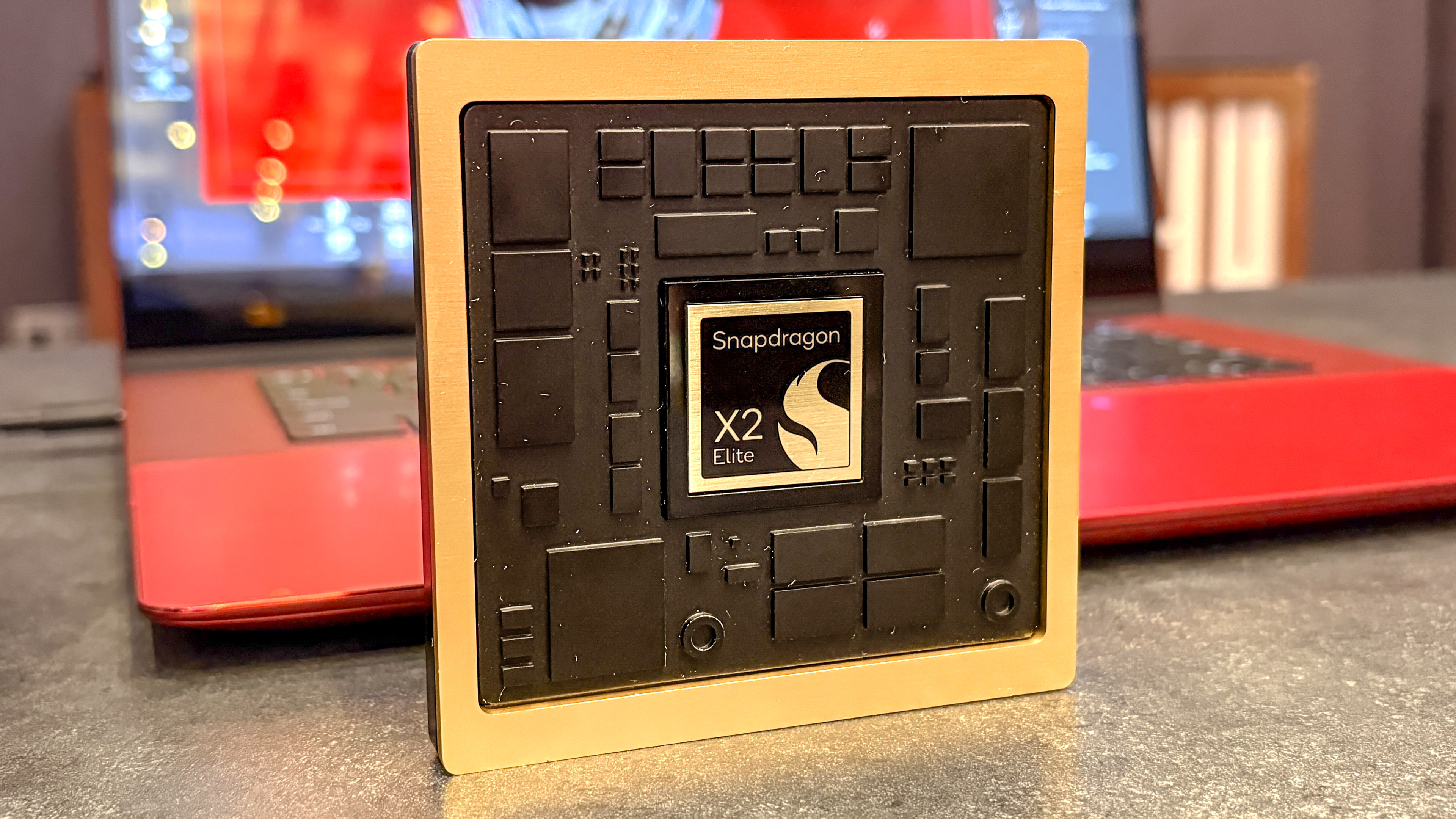 Qualcomm Snapdragon X2 Elite — now with open-source Vulkan driver support in Mesa 26.0
The Big News
Mesa 26.0 has officially shipped — and buried alongside the headline AMD ray tracing improvements is a milestone that Snapdragon Linux users have been waiting for: full Adreno Gen 8 Vulkan graphics support is now merged into the open-source TURNIP Vulkan driver.
This covers two of Qualcomm's most important SoCs right now:
- Snapdragon X2 Elite ("Glymur") — the chip powering next-generation ARM Windows laptops
- Snapdragon 8 Elite Gen 5 ("Kaanapali") — the chip inside the Galaxy S26 Ultra and other 2026 Android flagships
Merged in time for the Mesa 26.0 release is Vulkan driver support for Qualcomm Adreno Gen 8 graphics, notably used by the Snapdragon X2 laptop SoCs as well as the Snapdragon 8 Elite Gen 5. This builds on an earlier merge from December that laid out the initial Gen 8 graphics support and plumbed the Freedreno Gallium3D driver for OpenGL on the latest Qualcomm graphics IP.
What Is Mesa and Why Does This Matter?
For the uninitiated: Mesa is the open-source graphics library that powers GPU hardware acceleration on Linux. It's not a single driver — it's a framework containing driver implementations for every major GPU vendor: AMD (RADV/RadeonSI), Intel (ANV/Iris), NVIDIA (NVK), ARM Mali (PanVK/Panfrost), and Qualcomm Adreno (Turnip/Freedreno).
When you run a Vulkan game or app on Linux, Mesa is almost certainly the layer that translates Vulkan API calls into GPU commands. Mesa 26.0 is the open-source Linux graphics driver stack's latest major milestone, promising improvements to stability and performance, especially for gamers on AMD Radeon GPUs via Vulkan ray tracing, along with new support for Qualcomm Adreno Gen 8 graphics for Snapdragon X2 SoCs.
The Two Pillars: Turnip and Freedreno
Qualcomm's Adreno GPU support in Mesa is split across two components:
- Freedreno — the older, mature Gallium3D driver providing OpenGL/OpenGL ES support. Veteran graphics developer Rob Clark has led this project for over a decade.
- Turnip — the newer, actively developed open-source Vulkan driver for Adreno. It emerged from the same codebase as AMD's RADV driver and has been rapidly catching up with Qualcomm's proprietary driver in terms of feature support.
With Mesa 26.0, both Turnip and Freedreno now support Adreno Gen 8 — meaning you get both OpenGL and Vulkan coverage for the first time on this hardware generation.
The Complete Linux Stack for Snapdragon X2: Mesa 26.0 + Linux 6.19
Open-source GPU support requires two layers to work together: a kernel-mode driver (KMD) that handles hardware initialization and memory management, and a user-space driver that implements the graphics APIs. Mesa handles the user-space side; the kernel handles everything else.
The Adreno Gen 8 graphics support for Snapdragon X2 Elite and Snapdragon 8 Elite Gen 5 goes along with the MSM kernel driver having upstreamed hardware support for Linux 6.19. So with both Linux 6.19 and Mesa 26.0, accelerated graphics are ready to go for the new Snapdragon X2 laptops.
This is a pivotal moment for the Snapdragon X2 Elite on Linux. Previously, running Linux on these machines required workarounds, proprietary blobs, or degraded software rendering. Now you have a clean, fully upstream path:
| Component | What Provides It | When |
|---|---|---|
| Kernel mode driver (MSM) | Linux 6.19 | Upstream Q1 2026 |
| OpenGL / OpenGL ES | Freedreno (Mesa 26.0) | February 2026 |
| Vulkan | Turnip (Mesa 26.0) | February 2026 |
What's Still Missing: Variable Rate Shading
It's worth noting that Mesa 26.0's Adreno Gen 8 support, while functional, isn't feature-complete. Variable rate shading (VRS) is one of the features currently disabled by the TURNIP driver for this Gen 8 hardware as some issues are still being worked through.
Variable Rate Shading is a modern GPU optimization technique that allows different parts of a rendered frame to be shaded at different rates — reducing GPU load in less visually important areas while preserving detail where it matters. It's a performance-relevant feature for games, but its absence doesn't block basic Vulkan functionality. Expect VRS support to land in a future Mesa point release.
Mesa 26.0: Everything Else That Shipped
The Adreno Gen 8 news is just one chapter of a very big Mesa 26.0 release. Here's the full picture:
AMD RADV: Ray Tracing Gets Dramatically Faster
The headline feature of Mesa 26.0 for desktop Linux users is a massive improvement to Vulkan ray tracing on AMD Radeon GPUs through the RADV driver, driven largely by Valve's Linux graphics team.
Mesa 26.0 went live on February 11, 2026, introducing new instruction sets and optimizations for the RDNA 3 and RDNA 4 GPU architectures. The biggest improvements are in Vulkan-based ray-tracing workloads, delivered through the RADV Vulkan driver.
The main change: RADV now includes Wave32 execution for ray-tracing shaders on RDNA3 and RDNA4 GPUs, replacing the older Wave64 path. This optimization improves performance in ray-tracing workloads on supported AMD hardware.
The real-world numbers are striking. A Mesa developer described pipeline compilation changes that move toward proper function calls and separating previously inlined shader work, with claims of over 2x faster RT passes in Ghostwire Tokyo on a 7900XTX — with FPS going from approximately 30 to 40.
Benchmarks show more than 36% average FPS improvements and 52% better 1% lows with the RX 9070 XT under ray-tracing workloads in Silent Hill 2 with the new Mesa drivers.
RadeonSI Switches to ACO Compiler by Default
RadeonSI now uses the ACO shader compiler by default, reducing compile times. ACO (AMD Compiler Open-source) was already the default for RADV Vulkan; bringing it to RadeonSI (the OpenGL driver) aligns both paths and gives OpenGL users the same faster compile times and better code generation that Vulkan users have enjoyed.
KosmicKrisp: Vulkan-to-Metal for macOS
Mesa 26.0 introduces "KosmicKrisp," a new Vulkan-to-Metal layered driver designed for macOS. This expands Mesa beyond Linux and Android, giving macOS users an open-source translation layer for running Vulkan applications via Apple's Metal API.
New Vulkan Extensions Across All Drivers
Mesa 26.0 ships a large batch of Vulkan extension promotions and new feature support across every major driver:
| Extension / Feature | Drivers |
|---|---|
VK_KHR_maintenance10 |
ANV, NVK, RADV |
VK_EXT_shader_uniform_buffer_unsized_array |
ANV, HoneyKrisp, NVK, RADV |
VK_EXT_custom_resolve |
RADV |
VK_VALVE_video_encode_rgb_conversion |
RADV |
VK_EXT_discard_rectangles |
NVK |
VK_KHR_surface_maintenance1 |
ANV, HK, NVK, RADV, TU, v3dv, vn |
VK_KHR_swapchain_maintenance1 |
ANV, HK, NVK, RADV, TU, v3dv, vn |
VK_KHR_robustness2 |
PanVK v10+, HoneyKrisp, NVK, Turnip, lavapipe |
VK_KHR_dynamic_rendering |
PowerVR |
VK_EXT_external_memory_acquire_unmodified |
PanVK |
VK_EXT_device_memory_report |
PanVK |
| sparseResidencyImage2D | PanVK v10+ |
VK_KHR_present_id2 / VK_KHR_present_wait2 |
HoneyKrisp |
PanVK (Arm Mali): Big Step Forward
The Vulkan driver for Arm Mali GPUs also got significant attention in Mesa 26.0, with DRM format modifier support, sampler YCbCr conversion, and sparse residency landing for newer Mali hardware. PanVK now supports external memory acquisition, device memory reports, and sparse residency features on newer hardware versions.
Why the Adreno Gen 8 Support Matters Beyond Laptops
While the Snapdragon X2 Elite is the most obvious beneficiary, Adreno Gen 8 Vulkan support in Turnip has broader implications:
For Snapdragon 8 Elite Gen 5 Android devices: Turnip can be sideloaded as an alternative Vulkan ICD on rooted devices or custom ROMs. This opens the door to better emulator compatibility, more compliant Vulkan behavior, and community-driven driver improvements independent of Qualcomm's proprietary blob.
For emulation on Android: The Snapdragon 8 Elite family has had an inconsistent relationship with cutting-edge emulators, with reported regressions including random crashes and shader pipeline stalls. Turnip landing for Adreno 8xx should mean fewer rendering glitches, fewer burdensome device-specific quirks, and more uniform behavior.
For the open-source ecosystem: Every Adreno generation that gets Turnip support represents a reduction in Linux's dependency on proprietary blobs and vendor-controlled drivers. Qualcomm's hardware being "just works" on mainstream Linux (with upstream kernel + Mesa) is a significant shift.
Timeline and Availability
Mesa's release calendar listed February 11, 2026 for the 26.0.0 release. The source tarball is available from Mesa's official archive, while most users will receive the update through their Linux distribution's package repositories.
For the Snapdragon X2 Elite specifically: you need both Linux 6.19 (for the MSM kernel driver) and Mesa 26.0 (for Turnip/Freedreno). Linux 6.19 is not yet widely available in stable distributions as of this writing, but will arrive in the coming months via mainline-tracking distros like Arch, Fedora Rawhide, and Ubuntu's development branch.
What's Still to Come
Mesa 26.0's Adreno Gen 8 support is a foundation, not a ceiling. Several features remain in active development:
- Variable Rate Shading (VRS) — disabled for now, actively being fixed
- Ray tracing via Turnip — no timeline yet, but the AMD-RDNA lineage of Adreno's GPU architecture bodes well
- Performance tuning — early driver generations often have headroom; optimizations will land in Mesa 26.1 and beyond
- Android integration — Turnip for Snapdragon 8 Elite Gen 5 Android devices via Adrenotools and custom ROMs
Summary
Mesa 26.0, released February 11, 2026, is one of the most impactful Mesa releases in recent memory — and the Adreno Gen 8 story is just one part of it. For Snapdragon X2 laptop users, a fully open, upstream graphics stack is now within reach for the first time. For Snapdragon 8 Elite Gen 5 Android users, better emulation and community-driven driver support is on the horizon.
Combined with Linux 6.19's MSM kernel driver, this represents the fastest Qualcomm silicon has ever been brought into the open-source Linux graphics ecosystem — a sign of the maturing relationship between ARM-on-Linux, Qualcomm, and the Mesa community.
| Release | What It Delivers |
|---|---|
| Mesa 26.0 | Turnip (Vulkan) + Freedreno (OpenGL) for Adreno Gen 8 |
| Linux 6.19 | MSM kernel driver support for Snapdragon X2 Elite |
| Mesa 26.0 | Massive RADV Vulkan ray tracing gains (2x+ in some titles) |
| Mesa 26.0 | RadeonSI switches to ACO compiler by default |
| Mesa 26.0 | KosmicKrisp Vulkan-to-Metal driver for macOS |
Sources
- Phoronix — Adreno Gen 8 Vulkan Graphics Merged for Mesa 26.0
- Phoronix — Mesa 26.0 Released
- GamingOnLinux — Mesa 26.0 RADV Ray Tracing
- VideoCardz — Mesa 26.0 Vulkan and Ray Tracing
- WCCFTech — Mesa 26.0 Rolls Out
- Mesa Official Documentation — Freedreno/Turnip
- Linuxiac — Mesa 26.0 Released
This blog post covers the Adreno Gen 8 Vulkan driver merge as reported by Phoronix and corroborated by the Mesa 26.0 official release notes. Mesa 26.0.0 was released February 11, 2026.